
10 Ways to Prepare Your Toddler for Preschool
Getting Your Little Learner Ready for a Big Adventure
By: The Kid’s Directory Family Resource Guide – Houston
Original article May 2020. Updated May 2026 on kids-houston.com
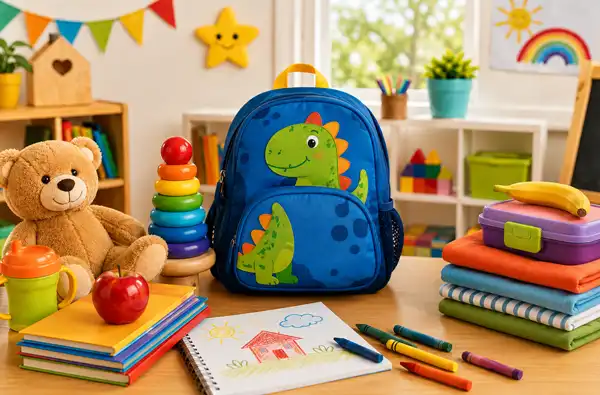
The first day of preschool is a milestone that’s equal parts exciting, emotional, and maybe just a tiny bit chaotic. One minute your toddler is proudly announcing they can put on their own shoes. The next minute they’re wearing them on the wrong feet and insisting they’re “perfect.”
That’s preschool in a nutshell—a wonderful season of learning, growing, making friends, and discovering independence.
For many children, preschool is their first experience spending several hours away from home. They’ll learn new routines, meet teachers and classmates, explore art and music, discover books and science, and practice important life skills like sharing, listening, and solving problems. It’s a big change, but with a little preparation, it can be an exciting one.
Parents often wonder:
- Is my child ready?
- Will they make friends?
- What if they cry at drop-off?
- What if I’m the one who cries?
The good news is that preschool readiness isn’t about knowing the alphabet or counting to 100. It’s about helping your child develop confidence, curiosity, independence, and resilience. Academic skills will come naturally as they learn through play, exploration, and everyday experiences.
The weeks before preschool begins offer the perfect opportunity to build these skills at home. With a little planning—and plenty of patience—you can help your toddler feel excited, capable, and ready for this wonderful new chapter.
Here are ten practical ways to prepare your toddler for preschool success.
1. Build Resilience Through Play
(And Don't Let Them Win Every Time!)
One of the greatest gifts you can give your child before preschool isn’t teaching them to read—it’s teaching them how to bounce back when things don’t go their way.
Preschool is full of little disappointments.
- Someone else gets the red crayon.
- Another child reaches the slide first.
- The block tower falls over.
- Snack isn’t served until everyone sits down.
- Children who have learned that it’s okay to lose a game, wait for a turn, or try again after making a mistake often adapt more easily to preschool life.
That doesn’t mean making every game difficult. It simply means allowing children to experience both success and disappointment in a safe environment where you’re there to encourage them.
Try saying things like:
- “That was disappointing, wasn’t it?”
- “You almost won!”
- “Let’s try again.”
- “I love how you kept trying.”
These conversations teach perseverance far better than always letting your child come out on top.
Great Preschool Games That Teach Life Skills
Many modern games naturally teach preschool readiness skills while feeling like pure fun.
Some favorites include:
(Affiliate Links)
- First Orchard (HABA) — Turn-taking, matching, and teamwork.
- Sneaky, Snacky Squirrel Game — Fine motor skills, colors, and sorting.
- Hoot Owl Hoot! — Cooperative play where everyone works together toward one goal.
- Count Your Chickens! — Counting and simple strategy.
- My First Carcassonne — Early planning and spatial awareness.
- Animal Upon Animal Junior — Patience, balance, and coordination.
- Memory Match Games — Concentration and attention skills.
Don’t underestimate simple games either.
- Playing catch…
- Rolling a ball back and forth…
- Building towers together…
- Even playing “Simon Says” all help children practice listening, following directions, and taking turns—all essential preschool skills.
2. Encourage Independence One Small Step at a Time
One of the biggest adjustments for preschool isn’t learning letters.
It’s learning to do things without Mom or Dad.
That can be harder for parents than toddlers.
Helping your child become independent doesn’t mean expecting perfection. It simply means giving them opportunities to try.
Encourage your child to:
- Put on their own shoes.
- Zip or unzip their jacket.
- Wash and dry their hands.
- Throw away trash after snack.
- Put toys back where they belong.
- Carry their own backpack.
- Open simple food containers.
- Ask politely for help when needed.
These little accomplishments build enormous confidence.
Instead of rushing in to help every time, try waiting just a few extra seconds.
You may be surprised by what your child can do independently.
One helpful phrase is:
“Would you like me to help, or would you like to try first?”
That simple question encourages problem-solving while reassuring your child that help is available if they truly need it.
Practice Short Separations
If your toddler has rarely spent time away from you, gradually introduce short periods with trusted grandparents, relatives, or family friends.
Even a couple of hours can help your child discover something important:
Mom and Dad always come back.
That confidence makes preschool drop-offs much easier.
And remember…
Avoid making goodbyes longer than necessary.
A cheerful hug, kiss, and “I’ll see you after snack and story time!” is usually much easier for children than a dramatic ten-minute farewell.
Sometimes the hardest part of preschool isn’t convincing your toddler to stay.
It’s convincing yourself to leave.
3. Practice Everyday Preschool Routines at Home
Preschool follows a schedule, and toddlers thrive when they know what to expect.
Several weeks before school begins, start introducing routines that resemble a preschool day.
For example:
Morning Routine
Practice:
- Getting dressed before breakfast.
- Brushing teeth.
- Washing hands.
- Putting on shoes.
- Carrying a backpack.
- Leaving the house at a consistent time.
The smoother mornings become at home, the less overwhelming preschool mornings will feel.
Mealtime Practice
Many toddlers enjoy “grazing” throughout the day.
Preschool doesn’t work that way.
Practice sitting together at the table for meals.
Encourage your child to:
- Stay seated.
- Use simple table manners.
- Clean up afterward.
- Open containers with a little assistance.
These small habits help children feel comfortable during classroom snack and lunchtime.
Rest Time
Even if your child no longer naps, many preschools include quiet time.
Practice spending 20–30 minutes looking at books, listening to calming stories, or resting quietly with soft music.
Learning to slow down is a skill that benefits children well beyond preschool.
4. Strengthen Fine Motor Skills Through Play
Preschool classrooms are full of activities that strengthen little hands.
Children cut paper, color pictures, stack blocks, build with manipulatives, paint, string beads, and explore sensory materials every day.
The stronger those little hand muscles become before school starts, the more confident children often feel participating in classroom activities.
Try fun activities such as:
- Play-Doh creations
- Finger painting
- Coloring with chunky crayons
- Water painting with brushes
- Stickers
- Dot markers
- Building with LEGO® DUPLO® bricks
- Lacing cards
- Large beads
- Child-safe scissors
- Tweezers for picking up pom-poms or cotton balls
- Sorting buttons by color (with close supervision)
Remember:
The goal isn’t creating Pinterest-worthy masterpieces.
It’s strengthening tiny fingers while having fun.
If today’s artwork looks more like abstract modern art than a dinosaur…
Congratulations.
You’re probably doing it right.
5. Help Your Child Build Social and Communication Skills
Preschool is often a child’s first opportunity to be part of a larger group of children without parents nearby. While teachers know that sharing, taking turns, and using kind words are skills that develop over time, practicing them at home can make the transition much smoother.
One of the easiest ways to prepare your child is simply by talking with them throughout the day.
Ask open-ended questions like:
- “What was your favorite part of today?”
- “How do you think Teddy Bear feels?”
- “What would you do if someone wanted to play with your toy?”
These conversations encourage children to express themselves, solve simple problems, and recognize emotions—important skills they’ll use every day in preschool.
You can also practice common classroom situations through pretend play.
Take turns pretending to be the teacher and the student.
Practice:
- Saying “Hi” to new friends.
- Asking, “Can I play with you?”
- Waiting patiently in line.
- Raising a hand.
- Asking a teacher for help.
- Sharing toys.
- Saying “Excuse me.”
- Using words instead of grabbing.
Children learn best through play, and acting out these situations removes much of the mystery before they ever walk into the classroom.
Remember, preschool teachers don’t expect children to have perfect manners or flawless social skills. They’re there to help children learn those things.
6. Read Books About Preschool Together
Books are one of the best ways to ease first-day jitters.
Stories allow children to “visit” preschool before they actually go, making unfamiliar routines feel exciting instead of scary.
As you read, stop occasionally and ask questions:
- “What do you think happens next?”
- “How do you think she feels?”
- “What would you do?”
These conversations often reveal worries your child may not know how to express otherwise.
Wonderful Preschool Books
Timeless favorites:
(Affiliate Links)
- Llama Llama Misses Mama by Anna Dewdney
- The Kissing Hand by Audrey Penn
- Maisy Goes to Preschool by Lucy Cousins
- Rosie Goes to Preschool by Karen Katz
- The Name Jar by Yangsook Choi
- What to Expect at Preschool by Heidi Murkoff
Newer favorites parents and teachers love:
(Affiliate Links)
- Tiny T. Rex and the Very Dark Dark by Jonathan Stutzman
- The King of Kindergarten by Derrick Barnes
- The Queen of Kindergarten by Derrick Barnes
- The Color Monster by Anna Llenas
- Our Class Is a Family by Shannon Olsen
- The Pigeon HAS to Go to School! by Mo Willems
These books open the door to wonderful conversations about friendship, feelings, classroom routines, and courage.
Reading just one preschool-themed book each night during the weeks leading up to school can help make preschool feel like an exciting adventure instead of an unknown experience.
7. Visit the Preschool Before the First Day
Imagine arriving at a brand-new place where you’ve never seen the bathroom, don’t know where the toys are, and aren’t sure where your backpack belongs.
That’s how preschool can feel for young children.
Whenever possible, visit the school before the first day.
Many preschools offer orientation days or classroom visits. Take advantage of them.
While you’re there:
- Walk through the classroom.
- Explore the playground.
- Meet the teacher.
- Find the cubbies.
- Locate the bathroom.
- Let your child ask questions.
- Point out fun areas like the reading corner or art center.
Even driving by the school several times before the first day can help.
Instead of saying,
“That’s your school.”
Try saying,
“That’s where you’ll get to paint pictures, make new friends, read stories, sing songs, and play outside!”
Children often mirror our emotions.
If we speak about preschool with excitement and confidence, they’re much more likely to feel the same way.
8. Let Your Child Help Pick Out Preschool Supplies
Children love having ownership over something that’s “theirs.”
Whether it’s choosing a dinosaur backpack, a lunchbox covered in kittens, or water bottle with rockets, allowing your child to make a few age-appropriate choices helps build excitement.
Turn shopping into an adventure.
Talk about each item.
“This backpack will hold your folder.”
“These shoes are great for running on the playground.”
“This lunchbox is going to carry your yummy snacks.”
At home, practice using everything before school starts.
Let your child:
- Wear the backpack.
- Open and close lunch containers.
- Zip jackets.
- Put papers into folders.
- Practice carrying everything independently.
Don’t forget to label jackets, lunchboxes, water bottles, sweaters, and backpacks with your child’s name.
You’d be amazed how many identical blue dinosaur water bottles can appear in one preschool classroom.
Somehow, they seem to multiply overnight.
The less time teachers spend solving “Whose jacket is this?” mysteries, the more time they have for teaching and fun.
Here’s the final section of your updated article.
9. Create a Preschool Routine Before School Starts
One of the biggest adjustments for new preschoolers isn’t the classroom itself—it’s the schedule.
Instead of waiting until the night before school begins, start easing into your new routine two to three weeks ahead of time. Small changes made gradually are much easier on everyone…including parents who haven’t had to locate tiny socks before sunrise all summer.
Shift Bedtime Gradually
Preschoolers typically need 10 to 13 hours of sleep each day, including naps when appropriate. A well-rested child is generally happier, more focused, and better able to handle new experiences.
Try moving bedtime earlier by 10 to 15 minutes every few nights until you’ve reached your desired schedule.
A calming bedtime routine might include:
- A warm bath
- Brushing teeth
- Reading two or three books
- Quiet conversation about the day
- A favorite stuffed animal or blanket
- Lights out at the same time each night
Consistency is far more important than perfection.
Practice the Morning Routine
Mornings often feel rushed during the first few weeks of school. Practicing ahead of time can make them much smoother.
Try a “pretend preschool morning.”
Have your child:
- Wake up at preschool time.
- Get dressed.
- Eat breakfast.
- Brush teeth.
- Put on shoes.
- Carry their backpack.
- Walk to the car—or even take a short drive around the neighborhood.
It may seem silly, but children love pretending, and routines become much less intimidating when they’ve already practiced them.
Encourage More Independent Play
Preschool won’t involve constant one-on-one entertainment.
Begin encouraging short periods of independent play each day.
Set out blocks, puzzles, dolls, toy animals, or pretend kitchen items and let your child explore while you remain nearby.
This helps build creativity, confidence, and attention span.
Limit Screen Time Before School
Technology certainly has its place, but preschool classrooms are filled with hands-on learning, conversations, movement, and imaginative play.
During the weeks before preschool starts, try replacing some screen time with activities such as:
- Reading together
- Outdoor adventures
- Building forts
- Puzzles
- Sensory bins
- Drawing and coloring
- Music and dancing
- Pretend play
If your family uses educational audio devices like a Yoto Player or Toniebox, listening to stories together can also be a wonderful quiet-time activity that encourages imagination without adding more screen time.
The goal isn’t eliminating technology—it’s making sure children have plenty of opportunities to explore the real world before they step into the classroom.
10. Prepare Yourself, Too
Here’s a little secret:
Sometimes preschool is harder on parents than it is on children.
You’ve spent years being your child’s favorite playmate, snack provider, storyteller, and professional finder of mysteriously missing stuffed animals.
Now someone else gets to experience many of those moments.
It’s okay to feel emotional.
It’s also okay if your child walks into preschool without looking back.
That doesn’t mean they love you any less.
It means you’ve done your job well.
Children who feel secure at home often feel confident enough to explore the world around them.
Keep Drop-Offs Short and Positive
Teachers consistently recommend keeping goodbyes brief.
Try something like:
“I love you. Have fun! I’ll see you after story time.”
Then leave confidently.
Lingering often makes separation harder for everyone.
Trust the teachers.
They’ve comforted many nervous preschoolers—and many nervous parents, too.
Celebrate the Little Wins
The first few weeks may include:
- Happy mornings
- Tearful mornings
- Extra cuddles
- Big smiles
- Unexpected meltdowns after school
- Endless stories about new friends
- Very few details except, “I played.”
All of it is normal.
Many children work so hard following directions and managing big emotions during the school day that they “let it all out” once they’re safely home.
Offer extra patience, hugs, and downtime after school.
Those quiet moments together often become the best part of the day.
Preschool Readiness Checklist
Every child develops at their own pace, but before preschool begins, it’s helpful if your toddler has had opportunities to practice many of these skills.
Social & Emotional Skills
✓ Plays beside or with other children
✓ Takes turns most of the time
✓ Follows simple directions
✓ Begins expressing feelings with words
✓ Can separate from parents for short periods
Self-Help Skills
✓ Washes hands with assistance
✓ Uses the toilet independently or meets the preschool’s potty-training expectations
✓ Eats while sitting at a table
✓ Drinks from an open cup or age-appropriate water bottle
✓ Helps put on shoes or a jacket
✓ Carries a backpack
Learning Skills
✓ Enjoys listening to books
✓ Recognizes some colors and shapes
✓ Can focus on an activity for several minutes
✓ Enjoys drawing, coloring, building, or creating
✓ Shows curiosity and asks questions
Remember, this isn’t a pass-or-fail checklist.
Preschool is where many of these skills are learned and strengthened.
The Bottom Line
Preschool isn’t about having a child who already knows their ABCs, counts perfectly to 100, or writes their name without a backwards letter or two.
It’s about nurturing curiosity, confidence, kindness, and a willingness to try something new.
The best preparation doesn’t come from flashcards or endless worksheets.
It comes from reading together on the couch, building blanket forts, taking walks, playing board games, talking about feelings, practicing independence, and laughing through life’s little mishaps—like discovering that your toddler somehow managed to put their shirt on backwards, inside out, and proudly declared they were “ready for school.”
Those everyday moments are building the very skills that matter most.
So take a deep breath, snap a few first-day photos, pack an extra change of clothes (trust us on this one), and get ready for an exciting new adventure.
Preschool is the beginning of a wonderful journey—not just for your child, but for your whole family.
Before you know it, you’ll be wondering where the time went as your little learner comes home proudly announcing they’ve made a new friend, painted a masterpiece, and learned a song you’ll be singing for the next six months.
Enjoy every moment. They really do grow up faster than anyone warns us.
Related Blog Articles:

Back To School – After School Activities – Field Trips:
The KD Family Resource Guide!
Providing the best schools, after-school activities, field trips, Spring & Summer Camps and activities, ABA Therapies, medical services, pediatric & family dentistry, museums, libraries, parents night out, kids eat free, retail, everything for birthday parties, holiday activities & events, festivals, and so much more!
We not only provide resources in Houston but south to Galveston, west to Rosenberg & north to College Station. Resources not only for kids & families but also for those with kids looking for some much needed “me time”.
Need to take a break from the routine to have some fun and create lasting memories? Check our Calendar Of Events for constantly updated fun and exciting activities & events for your kids and family.
We are always updating resources, adding more options & even creating new sections on our website for more resources. So be sure to check back often or just come hang out to read a blog.
The Kid’s Directory is Houston & the surrounding area’s most respected and trusted family resource guide that can ease your life. It covers all the different activities available for families with children of all ages. Ranging from activities, spring/summer & winter camps, academics, pediatricians, dentists, therapy, events to sports, other cognitive activities and more. Follow us on Facebook and Instagram.
© The Kid’s Directory. Accessing this content you agree to our disclaimer/terms & conditions.
As an Amazon Associate we earn from qualifying purchases.