
Pets and 4th of July Fireworks
By: The Kid’s Directory Family Resource Guide – Houston
June 2026 on kids-houston.com
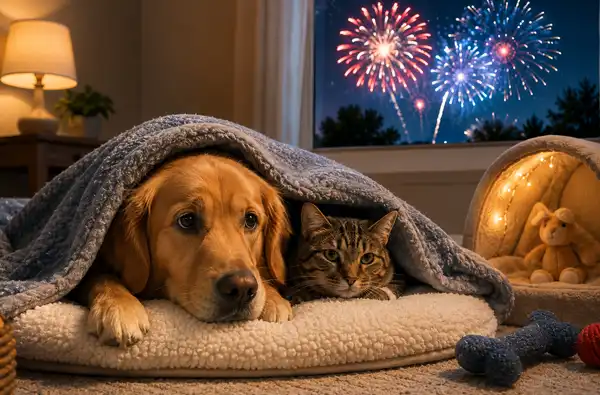
Pets and 4th of July Fireworks
The Fourth of July is one of America’s favorite holidays. It is a day filled with backyard barbecues, parades, family gatherings, red-white-and-blue decorations, and enough hamburgers and hot dogs to keep grill masters busy from morning until night. For many families, the celebration concludes with dazzling fireworks displays lighting up the night sky.
While humans often look forward to the festivities, our four-legged family members may have a very different opinion of the holiday. To dogs and cats, fireworks can sound less like a celebration and more like a surprise invasion from outer space. What humans experience as colorful entertainment can be overwhelming and frightening for pets whose hearing is far more sensitive than our own.
Every year, animal shelters and veterinary clinics report a significant increase in lost pets around the Fourth of July. Startled by loud noises, many pets attempt to escape from homes, yards, and even leashes in an effort to find safety. Understanding how fireworks affect pets and preparing ahead of time can help ensure that everyone in the family—including the furry members—has a safe and enjoyable holiday.
Why Fireworks Are So Scary for Pets
Imagine sitting quietly in your living room when suddenly thunderous explosions begin shaking the walls. Bright flashes appear outside the windows, unfamiliar smells drift through the air, and everyone around you seems excited while you have no idea what is happening.
That is essentially the Fourth of July from a pet’s perspective.
Dogs and cats possess hearing that is significantly more sensitive than human hearing. Sounds that may seem merely loud to us can feel overwhelming to them. Fireworks produce sudden, unpredictable noises that animals cannot anticipate or understand. Unlike a vacuum cleaner or a doorbell that eventually becomes familiar, fireworks occur randomly and often continue for hours.
Pets may interpret these sounds as danger. Their natural survival instincts can trigger a “fight, flight, or freeze” response. Some pets hide under furniture. Others pace, pant, tremble, bark excessively, drool, or refuse food. Cats may disappear into closets or under beds for hours. Some animals become so frightened that they attempt to escape through doors, windows, fences, or screens.
The challenge is that pets are not being stubborn, dramatic, or difficult. They are responding exactly as nature designed them to respond when they believe they are in danger.
Preparing Your Home Before the Fireworks Begin
One of the best ways to reduce stress for pets is to prepare before the first firework launches into the sky.
Start by creating a safe space inside your home. Choose a quiet room away from windows and exterior doors. Many pets feel comforted by enclosed spaces because they provide a sense of security. A bedroom, interior bathroom, laundry room, or crate can serve as a refuge.
Place familiar items in the area, including favorite blankets, toys, beds, and perhaps a recently worn shirt carrying your scent. Familiar smells can provide reassurance during stressful situations.
Close curtains and blinds to minimize flashes of light. Turning on fans, air conditioners, televisions, or calming music can help mask some of the outside noise. Many pet owners find that soft classical music or white noise creates a more soothing environment.
It is also wise to exercise dogs earlier in the day. A long walk, game of fetch, or other physical activity can help burn excess energy and encourage relaxation later. A tired dog is often a calmer dog, although even the most exhausted canine may still be startled by fireworks.
Helping Dogs Stay Calm During Fireworks
Dogs often display their fear more openly than cats. Some may bark continuously, while others become clingy shadows following their owners from room to room.
The key is to remain calm yourself. Dogs are experts at reading human emotions. If you appear anxious or overly concerned, your dog may conclude that there truly is something to fear.
Allow your dog to stay close if that provides comfort. Some dogs benefit from sitting beside family members while watching television or engaging in quiet activities. Gentle petting and a calm voice can be reassuring when offered naturally.
Interactive toys filled with treats can also help redirect attention away from the noise. Puzzle feeders, frozen treats, and chew toys provide both mental stimulation and comfort.
For dogs with severe anxiety, consult your veterinarian before the holiday. There are various options available, ranging from behavioral strategies to veterinarian-approved medications designed to reduce fear and stress. Planning ahead is important because waiting until fireworks are already underway limits your options.
One common mistake owners make is forcing dogs to confront the sounds. Telling a frightened dog to “be brave” is about as effective as telling a human to enjoy a surprise roller coaster ride while blindfolded. Allow your pet to cope in the way that feels safest.
Helping Cats Stay Calm During Fireworks
Cats are masters of finding hiding places that humans never knew existed. During fireworks season, many cat owners suddenly discover that their pet has a secret relationship with the back corner of a closet.
Unlike dogs, cats often prefer solitude when stressed. If your cat chooses to hide, resist the urge to pull them out. Their hiding place may be providing exactly the security they need.
Keep cats indoors well before fireworks begin. Even cats that occasionally enjoy outdoor adventures should remain inside during holiday celebrations.
Create multiple hiding options throughout the home. Covered beds, cardboard boxes, cat tunnels, and quiet rooms can all provide refuge.
Some cats respond positively to familiar routines. Feeding meals at regular times, maintaining normal household activities, and avoiding unnecessary disruptions can help reduce stress.
Because cats can become extremely skilled escape artists when frightened, double-check doors, windows, and screens. A cat that has never attempted an escape before may suddenly decide that tonight is the night to audition for an action movie.
Common Holiday Hazards Beyond Fireworks
Fireworks are not the only concern during Independence Day celebrations.
Many picnic foods can be dangerous for pets. Onions, garlic, grapes, raisins, chocolate, alcohol, and certain sugar-free products containing xylitol can be toxic. Rich foods may also cause digestive upset or pancreatitis.
Glow sticks, decorations, sparklers, lighter fluid, and firework debris should all remain out of reach. Even spent fireworks can contain chemicals that may be harmful if ingested.
Guests coming and going throughout the day create additional opportunities for pets to slip outside unnoticed. A well-meaning visitor carrying a plate of potato salad may unknowingly leave a door open just long enough for a frightened pet to escape.
If Your Pet Becomes Frightened
If your pet begins showing signs of fear, focus on providing a calm and secure environment.
Avoid punishment. A dog that barks from fear is not misbehaving. A cat hiding under a bed is not being antisocial. Fear-based behaviors require patience and reassurance.
Stay nearby if your pet seeks comfort. Speak softly and maintain a relaxed demeanor. Some pets prefer physical affection, while others simply appreciate your quiet presence.
Do not force interactions. Let your pet decide whether they want attention or space.
Most importantly, ensure all doors, gates, windows, and fences are secure. A frightened pet can move surprisingly fast when attempting to escape.
What To Do If Your Pet Runs Away
Despite every precaution, some pets still manage to escape. If this happens, quick action can significantly improve the chances of a safe reunion.
Begin searching immediately. Many frightened pets do not travel far. They often hide nearby under decks, in bushes, behind sheds, or beneath vehicles.
Bring familiar items such as favorite toys, blankets, treats, and food. Familiar scents can help attract pets back toward home.
Notify neighbors as soon as possible. Extra eyes searching the area can make a tremendous difference.
Contact local animal shelters, veterinary clinics, and animal control agencies. Provide recent photographs and detailed descriptions. Even if your pet has not been found immediately, continue checking regularly.
Social media can also be an effective tool. Local community groups frequently help reunite lost pets with their families.
Microchips dramatically increase the likelihood of recovering lost animals. Ensure your contact information is current and accurate. An outdated phone number can turn a successful rescue into a frustrating dead end.
If your pet returns home after a frightening experience, schedule a veterinary examination if there are any signs of injury, exhaustion, or illness.
The Importance of Identification
One of the simplest and most effective safety measures is ensuring your pet wears proper identification.
Collars should include current tags displaying your phone number. Microchips provide an additional layer of protection if collars become lost or removed.
Many pet owners never expect their animals to run away. Unfortunately, every year countless lost-pet stories begin with the phrase, “They’ve never done this before.”
The Fourth of July has a way of convincing even the most predictable pet to make an unexpected decision.
Celebrating Responsibly
The Fourth of July is ultimately about gathering with family, friends, and community to celebrate freedom and create lasting memories. For pet owners, that celebration includes taking a few extra steps to protect beloved companions.
With thoughtful preparation, a secure environment, and a little understanding of how fireworks affect animals, families can enjoy the holiday while helping pets feel safe and comfortable.
When the fireworks have faded, the grill has cooled, and the last sparkler has burned out, the best ending to any Independence Day celebration is simple: everyone safely home, including the family members who happen to walk on four legs and occasionally chase squirrels for sport.
After all, while fireworks may last only a few moments, the peace of mind that comes from knowing your pets are safe is something worth celebrating all year long.
Related Blog Articles:

For Spring & Summer Camps and Activities:
The KD Family Resource Guide!
Providing the best schools, after-school activities, field trips, Spring & Summer Camps and activities, ABA Therapies, medical services, pediatric & family dentistry, museums, libraries, parents night out, kids eat free, retail, everything for birthday parties, holiday activities & events, festivals, and so much more!
We not only provide resources in Houston but south to Galveston, west to Rosenberg & north to College Station. Resources not only for kids & families but also for those with kids looking for some much needed “me time”.
Need to take a break from the routine to have some fun and create lasting memories? Check our Calendar Of Events for constantly updated fun and exciting activities & events for your kids and family.
We are always updating resources, adding more options & even creating new sections on our website for more resources. So be sure to check back often or just come hang out to read a blog.
The Kid’s Directory is Houston & the surrounding area’s most respected and trusted family resource guide that can ease your life. It covers all the different activities available for families with children of all ages. Ranging from activities, spring/summer & winter camps, academics, pediatricians, dentists, therapy, events to sports, other cognitive activities and more. Follow us on Facebook and Instagram.
© The Kid’s Directory. Accessing this content you agree to our disclaimer/terms & conditions.
As an Amazon Associate we earn from qualifying purchases.