
Cyberbullying: What Parents Need to Know
By: The Kid’s Directory Family Resource Guide – Houston
July 2026 on kids-houston.com
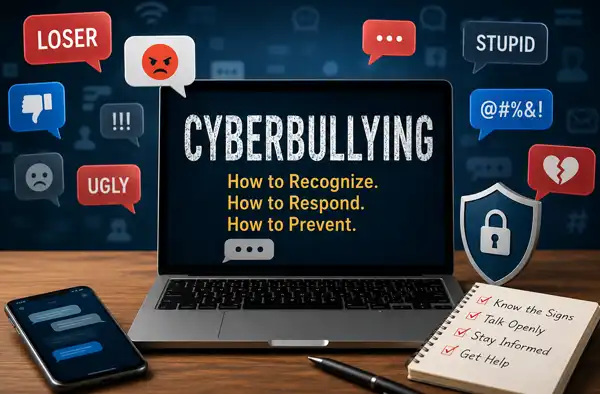
Cyberbullying: What Parents Need to Know
What Is Cyberbullying?
Cyberbullying is bullying that takes place through digital devices such as smartphones, computers, tablets, gaming consoles, smartwatches, and other internet-connected devices. It occurs on social media platforms, text messaging apps, online games, email, discussion forums, live-streaming services, and virtually anywhere people interact online.
It involves repeated harmful behavior intended to embarrass, intimidate, threaten, harass, isolate, manipulate, or humiliate another person. Unlike disagreements or isolated arguments between friends, cyberbullying is typically ongoing and involves a pattern of intentional behavior that causes emotional distress.
One of the biggest differences between traditional bullying and cyberbullying is that the internet never really closes. Years ago, a child who was bullied at school could usually find relief once they arrived home. Today, hurtful messages, embarrassing photos, or cruel comments can continue long after the school day has ended. Notifications can appear during dinner, while doing homework, or even in the middle of the night, making it difficult for children to find a safe space away from the bullying.
Another challenge is the speed at which information spreads online. A single embarrassing photo or rumor can be shared with dozens—or even hundreds—of people within minutes. Even if the original post is deleted, screenshots and shared copies can continue circulating, making children feel as though they have permanently lost control over their privacy.
Cyberbullying can also feel more anonymous than traditional bullying. Some individuals hide behind fake profiles, anonymous usernames, or temporary accounts, making victims feel powerless because they may not know exactly who is targeting them. This anonymity sometimes encourages people to say things online that they would never say face-to-face.
Parents should also understand that cyberbullying is not limited to teenagers. Elementary-aged children are spending more time online through educational platforms, online games, tablets, and messaging apps. As children gain greater access to technology, conversations about kindness, digital responsibility, and internet safety should begin early and continue throughout adolescence.
The encouraging news is that children who have strong relationships with trusted adults are far more likely to report problems before they become overwhelming. Creating an environment where children know they can speak honestly—without fear of immediate punishment or losing all access to technology—can make all the difference.
What Does Cyberbullying Look Like?
Cyberbullying takes many forms, and it isn’t always obvious. Sometimes the bullying is loud and public, while other times it happens quietly through private messages or anonymous accounts. In many cases, adults are completely unaware that it is happening because much of children’s communication now takes place online.
Parents often imagine bullying as playground teasing or name-calling in the hallway. Today’s bullying can happen with a single click, and unfortunately, the audience can be much larger. A mean comment posted publicly can quickly gain likes, shares, or replies, making the victim feel embarrassed in front of classmates, teammates, or even complete strangers.
Examples include:
Harassing Messages
Repeated insults, threats, or cruel comments sent through text messages, social media, or messaging apps.
These messages may begin as teasing but gradually become more aggressive. Some children receive dozens of unwanted messages in a single day, making it difficult to disconnect emotionally from the situation.
Public Humiliation
Posting embarrassing photos or videos without permission.
Sometimes a picture is altered with captions intended to make someone look foolish, while other times an embarrassing moment is recorded and shared simply for laughs. Even if intended as a “joke,” the emotional impact can be significant.
Spreading Rumors
Sharing false information online to damage someone’s reputation.
Rumors spread quickly through group chats and social media, and they can be nearly impossible to stop once they’ve been shared multiple times.
Fake Profiles
Creating fake social media accounts to impersonate or mock another person.
Impersonation can confuse friends, damage reputations, and cause emotional distress. In some cases, fake accounts are used to send hurtful messages while pretending to be someone else.
Excluding Someone
Purposely leaving someone out of online conversations, gaming sessions, or group chats to make them feel isolated.
Social exclusion can be especially painful for children because friendships are such an important part of their development. Being intentionally left out can make a child feel unwanted or rejected.
Doxxing
Sharing someone’s private information—such as their address, phone number, school, or family details—without permission.
This behavior is extremely serious because it places personal safety and privacy at risk.
Cyberstalking
Repeatedly sending threatening or intimidating messages or monitoring someone’s online activity in a way that causes fear.
Victims may begin to feel anxious every time they receive a notification or log into an app.
Sharing Private Images
Forwarding or posting private photos without consent is one of the most harmful forms of cyberbullying and may also have serious legal consequences depending on the circumstances and the ages of those involved.
Why Cyberbullying Can Be So Harmful
Children naturally want to feel accepted by their peers. When hurtful comments are posted online, they may feel as though everyone has seen them—even if only a small number of people actually have.
Unlike spoken words, digital content can:
- Be shared instantly
- Be copied repeatedly
- Remain online indefinitely
- Reach large audiences
- Resurface months or years later
For many children, this creates a feeling that the bullying is endless. Even after the original incident has passed, they may worry that classmates will continue to see or share the content.
Cyberbullying can affect nearly every aspect of a child’s life. Some children begin avoiding school because they fear seeing classmates involved in the online harassment. Others withdraw from extracurricular activities, stop participating in sports they once loved, or become reluctant to spend time with friends.
Emotionally, cyberbullying may contribute to:
- Anxiety
- Depression
- Loneliness
- Low self-esteem
- Fear of social situations
- Difficulty concentrating
- Increased stress
- Changes in sleep patterns
Some children experience physical symptoms such as headaches, stomachaches, fatigue, or loss of appetite caused by chronic stress.
Parents should never assume that online bullying is “just kids being kids.” While many children recover with strong support, persistent cyberbullying can have lasting effects if left unaddressed. Taking concerns seriously and responding promptly sends an important message that your child’s feelings matter and that help is available.
Signs Your Child May Be Experiencing Cyberbullying
Not every child will immediately tell a parent they’re being bullied online. In fact, many children work very hard to hide what’s happening because they’re embarrassed, afraid, or unsure how adults will react.
Some common warning signs include:
- Suddenly avoiding their phone or computer
- Becoming upset after using digital devices
- Deleting social media accounts unexpectedly
- Avoiding school
- Changes in sleeping or eating habits
- Increased anxiety or irritability
- Loss of interest in favorite activities
- Declining grades
- Frequent headaches or stomachaches
- Withdrawing from family or friends
- Appearing nervous when notifications arrive
You may also notice your child becoming unusually quiet after checking their phone, hiding their screen when someone walks by, or asking to stay home from activities they previously enjoyed.
Keep in mind that none of these signs automatically mean cyberbullying is occurring. Similar behaviors may also be associated with stress, anxiety, depression, or other challenges. However, noticeable changes in your child’s behavior should always be viewed as an opportunity to begin a calm, supportive conversation.
One of the most important things parents can do is listen without immediately trying to solve the problem. Children are often more willing to open up when they feel heard rather than judged. Sometimes simply knowing that a trusted adult believes them is the first step toward helping them recover.
Signs Your Child May Be Cyberbullying Others
Sometimes parents are surprised to discover their own child has participated in online bullying. It’s important to remember that not every child who bullies others is “a bad kid.” Children may join in because they want to fit in, they’re trying to impress friends, they’re acting impulsively, or they simply don’t understand the lasting impact their words can have when shared online.
The internet can create a false sense of distance. Without seeing another person’s facial expressions or emotional reaction, some children may say things online that they would never say in person. This disconnect can make it easier for them to minimize the harm they’re causing.
Possible warning signs include:
- Becoming secretive about online activities
- Using multiple anonymous accounts
- Laughing about humiliating others online
- Becoming defensive when asked about social media
- Receiving complaints from school or other parents
- Spending excessive time monitoring others online
You may also notice your child quickly switching screens when you enter the room, deleting messages frequently, refusing to discuss certain online friendships, or becoming unusually protective of their devices.
If you discover your child has participated in cyberbullying, try to remain calm. While it’s natural to feel disappointed or upset, approaching the situation with anger alone may cause your child to become defensive instead of honest.
Instead, use the opportunity to teach empathy and accountability. Ask questions like:
- “How do you think that message made the other person feel?”
- “What would you have done if someone had sent that to you?”
- “What can you do to help make things right?”
Children often learn valuable life lessons when parents focus on correcting the behavior rather than labeling the child.
Helping your child understand that every person behind a screen is a real human being with real feelings is one of the most important lessons you can teach.
Why Children Don't Tell Their Parents
Many children stay silent because they worry that:
- Their devices will be taken away.
- Parents won’t understand.
- Reporting it will make things worse.
- They’ll be blamed.
- They should handle it themselves.
- They’re embarrassed.
Some children also fear being labeled a “snitch” by classmates or worry that the bullying will intensify if the person responsible discovers they told an adult. Others simply don’t want to disappoint their parents or admit they’re struggling.
Older children and teenagers may believe they should be able to solve the problem on their own. Unfortunately, trying to manage cyberbullying alone often allows the situation to continue longer than necessary.
Creating an environment where children know they can talk without immediately losing internet privileges encourages honest conversations. Reassure your child that your first priority is helping them stay safe—not punishing them for bringing a problem to your attention.
When your child comes to you, listen carefully before offering advice. Resist the urge to immediately grab their phone or start contacting other parents. Instead, thank them for trusting you and let them know you’ll work together to decide the best next steps.
Children who feel supported are much more likely to continue seeking help when future challenges arise.
How Parents Can Help Prevent Cyberbullying
Preventing cyberbullying starts long before a problem occurs. Building healthy digital habits, maintaining open communication, and teaching empathy from an early age can significantly reduce the likelihood that children will become victims—or participants—of online bullying.
Just as we teach children to look both ways before crossing the street, we also need to teach them how to navigate today’s digital world safely and responsibly.
Keep Communication Open
The most effective tool isn’t an app—it’s conversation.
Ask open-ended questions like:
- What’s your favorite app right now?
- Who do you usually play games with online?
- Has anyone ever been mean online?
- What would you do if a friend was being bullied?
Don’t wait until something goes wrong to start these discussions. Make conversations about technology a regular part of family life. The more comfortable children become talking about their online experiences, the more likely they are to come to you if something concerning happens.
Try to avoid reacting with immediate criticism when your child shares something surprising. Staying calm helps keep the lines of communication open.
Teach Good Digital Citizenship
Help children understand that the same kindness expected in person applies online.
Encourage them to:
- Think before posting.
- Respect privacy.
- Avoid joining online pile-ons.
- Report inappropriate behavior.
- Stand up respectfully for others.
Discuss the idea that once something is posted online, it can be difficult—or impossible—to completely erase. Even messages that disappear after a short time can often be captured with screenshots.
A simple rule works well:
If you wouldn’t say it face-to-face, don’t type it.
Remind children that being a positive digital citizen also means refusing to share hurtful rumors, embarrassing photos, or cruel jokes, even if “everyone else” is doing it.
Know the Apps Your Child Uses
You don’t need to master every social media platform.
Instead, understand:
- What apps they use
- Who they communicate with
- Privacy settings
- Age requirements
- Reporting tools
- How content is shared
Ask your child to show you how their favorite apps work. Many children enjoy being the “expert,” and it gives parents valuable insight into how those platforms are actually being used.
Technology changes quickly, but maintaining curiosity and staying involved will help you recognize potential risks before they become bigger problems.
Set Family Technology Rules
Create clear expectations about:
- Screen time
- Device-free meals
- Bedtime phone rules
- Appropriate online behavior
- Privacy
- Sharing personal information
- Respectful communication
Consider creating a Family Technology Agreement together. When children help establish the rules, they’re often more willing to follow them.
Review those expectations occasionally as your child grows and begins using new apps or devices.
Consistency is key. Just as household rules apply offline, expectations for respectful behavior should also apply online.
What To Do If Your Child Is Being Cyberbullied
Stay Calm
Your child needs reassurance more than panic.
Thank them for telling you.
Avoid reacting with immediate anger or taking away all technology unless safety requires it.
For many children, working up the courage to tell a parent is one of the hardest steps. If their first experience is met with yelling, punishment, or having every device confiscated, they may be less likely to come to you the next time something goes wrong.
Instead, reassure your child that they did the right thing by speaking up. Let them know you’ll work through the situation together and remind them that what happened is not their fault.
Try saying:
“I’m really glad you told me. We’ll figure this out together.”
Those few words can provide an enormous sense of comfort.
Save the Evidence
Take screenshots of:
- Messages
- Photos
- Usernames
- Dates
- Threats
Documentation can be extremely helpful if schools, social media companies, or law enforcement become involved.
Save screenshots before blocking the individual, since blocking may make it harder to retrieve conversations later. If the bullying continues over several days or weeks, keep a simple record of dates, times, and what occurred. Having organized information can make it easier for school officials or investigators to understand the pattern of behavior.
Block and Report
Most platforms allow users to:
- Block accounts
- Report abusive content
- Restrict unwanted contact
Teach your child how to use these safety features.
Many social media platforms and gaming services take reports of harassment seriously and have dedicated teams that review abusive behavior. While reporting doesn’t always result in immediate action, it helps create a safer online environment for everyone.
Encourage your child not to engage in online arguments with the person responsible. Responding often fuels the behavior and may encourage the bully to continue.
Contact the School
If classmates are involved, notify school administrators.
Many schools have policies addressing cyberbullying, particularly when it affects the school environment.
Provide copies of screenshots or other documentation if available. School counselors, administrators, and teachers may already be aware of similar issues involving other students and can work together to address the situation.
Remember that schools generally want students to feel safe both on campus and in online spaces that affect learning and student well-being.
Seek Professional Help When Needed
If bullying is causing significant emotional distress, consider speaking with:
- Your pediatrician
- A licensed therapist
- A school counselor
- A child psychologist
Children respond to bullying differently. Some bounce back quickly with family support, while others may experience lingering anxiety, depression, sleep problems, or declining self-confidence.
Professional support can give children healthy coping skills while also providing parents with guidance on how to best support their child during recovery.
Seeking help is a sign of strength—not weakness.
When Cyberbullying Crosses the Line Into Criminal Behavior
Some online behavior goes beyond bullying and may violate the law.
Examples include:
- Credible threats of violence
- Sexual exploitation
- Sharing intimate images without consent
- Extortion
- Identity theft
- Hate crimes
- Stalking
If your child is in immediate danger or receives credible threats, contact local law enforcement promptly.
Parents should also report situations involving child exploitation or explicit images to the appropriate authorities immediately. Never assume that someone else has already reported it.
If you’re unsure whether a situation rises to the level of criminal behavior, your local police department or school resource officer can often provide guidance on the appropriate next steps.
Helping Your Child Recover From Cyberbullying
Healing takes time.
Parents can help by encouraging:
- Healthy friendships
- Sports and hobbies
- Family activities
- Outdoor play
- Counseling if needed
- Positive social experiences
Recovery isn’t simply about ending the bullying—it’s about helping your child rebuild confidence and feel safe again.
Continue checking in with your child even after the bullying appears to have stopped. Some children continue worrying that it could happen again, while others may become hesitant to trust new friendships.
Celebrate your child’s strengths and accomplishments. Whether it’s learning a new skill, joining a club, volunteering, or spending time with supportive friends, positive experiences help rebuild self-esteem.
Remind your child often that another person’s cruelty says far more about the bully than it does about them.
One mean comment online should never become your child’s inner voice.
Building Digital Resilience
While parents cannot control every online interaction, they can help children develop resilience.
Teach children to:
- Pause before reacting
- Walk away from online conflict
- Ask trusted adults for help
- Think critically about what they see online
- Remember that social media rarely reflects real life
- Treat others with empathy
Digital resilience also means helping children understand that not every opinion posted online deserves their attention. Learning when to ignore negativity, block harmful users, and focus on healthy relationships is an important life skill.
Encourage your child to balance technology with offline experiences. Time spent reading, playing outside, participating in sports, volunteering, creating art, or enjoying family activities helps children develop confidence and friendships that extend beyond a screen.
One of the greatest gifts parents can give is teaching children that their value is never determined by likes, followers, comments, or online popularity.
Helpful Resources for Parents
These organizations provide reliable, up-to-date information about cyberbullying, internet safety, and digital wellness.
StopBullying.gov
Offers comprehensive information about bullying prevention, warning signs, intervention strategies, and guidance for parents, educators, and children.
Cyberbullying Research Center
Provides current research, downloadable parent guides, educational materials, and practical strategies for preventing and responding to cyberbullying.
Common Sense Media
Offers expert reviews of apps, games, websites, movies, and streaming content, along with age recommendations and family technology advice.
National Center for Missing & Exploited Children (NCMEC)
Provides excellent resources about online safety, protecting personal information, reporting online exploitation, and educating children about internet safety.
ConnectSafely
Publishes easy-to-understand parent guides covering popular social media platforms, gaming systems, artificial intelligence, digital citizenship, and online privacy.
American Academy of Pediatrics – HealthyChildren.org
Offers pediatrician-approved articles covering screen time, social media, mental health, internet safety, and healthy technology habits for children of all ages.
Frequently Asked Questions
At what age should I start talking to my child about cyberbullying?
As soon as your child begins using internet-connected devices or online games. Even young children benefit from learning about kindness, privacy, and asking an adult for help if something online makes them uncomfortable.
Should I monitor my child’s devices?
Monitoring should be age-appropriate. Younger children generally require closer supervision, while older teens benefit from increasing independence combined with regular conversations and mutual trust. The goal is to guide—not spy on—your child as they develop healthy digital habits.
Should I take away my child’s phone if they’re being cyberbullied?
Usually, no. Removing devices immediately may discourage children from reporting future problems because they fear losing access to their friends and activities. Instead, work together to block offenders, report abusive behavior, strengthen privacy settings, and develop a plan that keeps your child safe.
Can cyberbullying happen through online games?
Absolutely. Multiplayer games often include voice chat, messaging systems, private groups, and live interactions. Children should understand that the same rules of kindness and respect apply whether they’re in a classroom or playing an online game.
How can I encourage my child to talk about their online experiences?
Show genuine interest in the technology they enjoy. Ask them to teach you about their favorite games or apps, celebrate positive online experiences, and avoid reacting harshly when they share mistakes or concerns. The more approachable you are, the more likely they’ll come to you when something serious happens.
Conclusion
Technology has become a permanent part of childhood, bringing incredible opportunities alongside new challenges. While parents can’t monitor every message, post, or online interaction, they can create something even more powerful: a relationship built on trust, communication, and support.
By staying involved in your child’s digital life, teaching respectful online behavior, and encouraging open conversations, you can help them navigate the internet with confidence and compassion. Just as we teach children to cross the street safely or wear a bicycle helmet, teaching digital safety has become another essential life skill.
Remember that cyberbullying is not a reflection of your parenting or your child’s worth. It is a challenge that many families face in today’s connected world. With early intervention, supportive adults, and a thoughtful plan, most children can recover, grow stronger, and continue building healthy friendships both online and offline.
Most importantly, remind your child that they never have to face online problems alone. Whether the issue is a hurtful comment, a fake account, repeated harassment, or exclusion from a group chat, there is always someone ready to listen, help, and stand beside them.
Kindness remains one of the most powerful tools we have. By modeling empathy, respect, and responsible digital behavior at home, parents can help raise not only safer internet users but also compassionate young people who contribute to making the online world a better place for everyone.
Related Blog Articles:


The KD Family Resource Guide!
Providing the best schools, after-school activities, field trips, Spring & Summer Camps and activities, ABA Therapies, medical services, pediatric & family dentistry, museums, libraries, parents night out, kids eat free, retail, everything for birthday parties, holiday activities & events, festivals, and so much more!
We not only provide resources in Houston but south to Galveston, west to Rosenberg & north to College Station. Resources not only for kids & families but also for those with kids looking for some much needed “me time”.
Need to take a break from the routine to have some fun and create lasting memories? Check our Calendar Of Events for constantly updated fun and exciting activities & events for your kids and family.
We are always updating resources, adding more options & even creating new sections on our website for more resources. So be sure to check back often or just come hang out to read a blog.
The Kid’s Directory is Houston & the surrounding area’s most respected and trusted family resource guide that can ease your life. It covers all the different activities available for families with children of all ages. Ranging from activities, spring/summer & winter camps, academics, pediatricians, dentists, therapy, events to sports, other cognitive activities and more. Follow us on Facebook and Instagram.
© The Kid’s Directory. Accessing this content you agree to our disclaimer/terms & conditions.
As an Amazon Associate we earn from qualifying purchases.